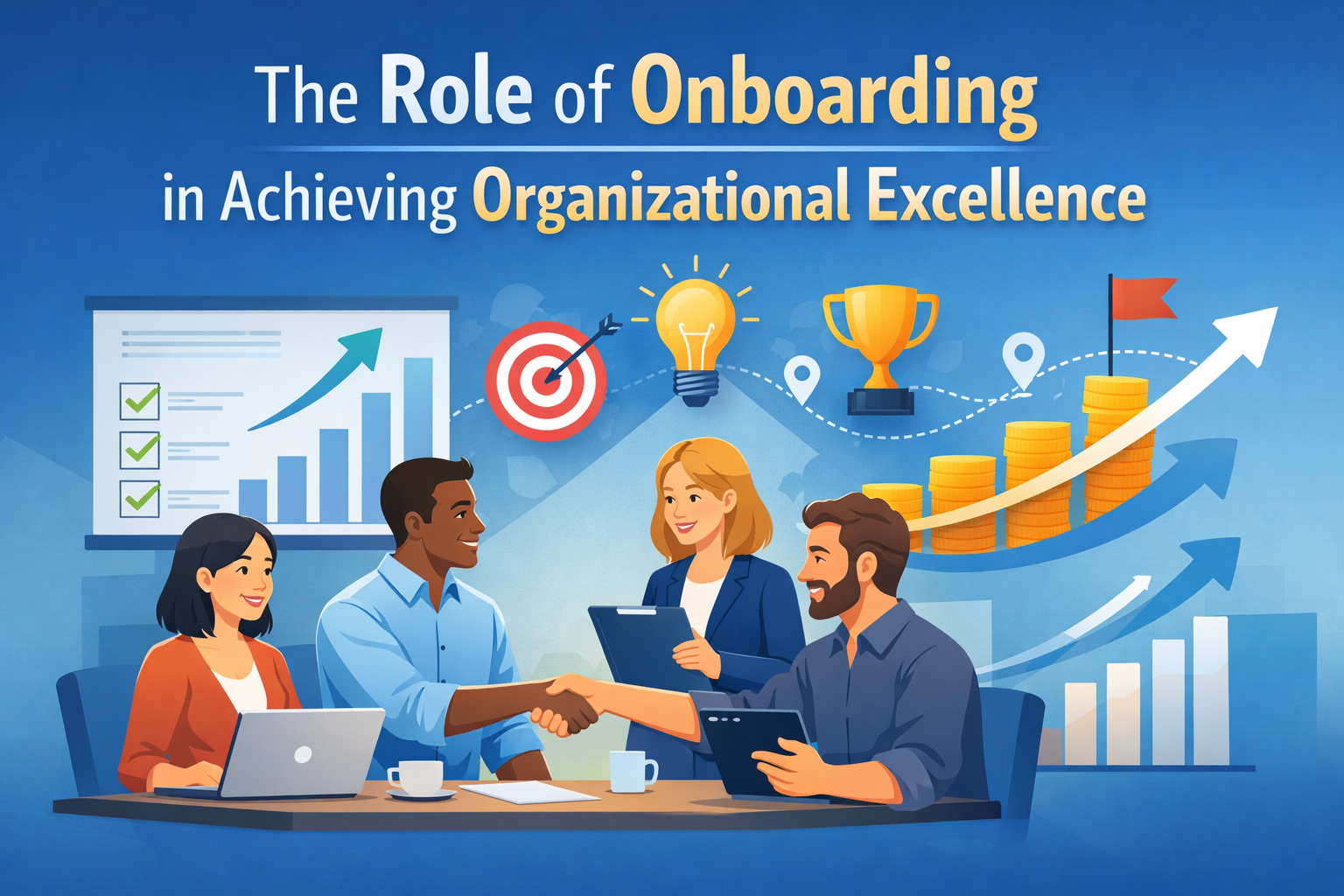

Role of Onboarding in Achieving Organizational Excellence is fundamental to success in today’s competitive corporate landscape, where organizations must attract, engage, and retain top-tier talent.
As the workforce continues to evolve, grappling with challenges such as talent scarcity, soaring turnover rates, and transformative shifts in work dynamics, companies must acknowledge the pivotal significance of employee onboarding when determining their future as part of the Role of Onboarding in Achieving Organizational Excellence.
The onboarding process has transcended the realm of mere paperwork completion; it now stands as a strategic investment that wields the potential to exert a profound influence on a company´s financial performance and overarching success.
Table of Contents
Defining a Comprehensive Onboarding Program
A structured onboarding program must evolve into a meticulously guided journey, one that equips new hires to meet specific objectives while ensuring an exceptional experience that fosters a deep affinity for the company. As part of the Role of Onboarding in Achieving Organizational Excellence, onboarding is no longer a procedural task relegated solely to the HR department; rather, it has emerged as a strategic cornerstone of the organization. It requires meticulous planning of objectives, phases, involved stakeholders, specific Key Performance Indicators (KPIs) for gauging efficacy, and the implementation of tools geared towards continuous improvement.
“To make onboarding work, HR leaders need to design a consistent, creative and deeply engaging experience that wows new employees.” – Gallup
The Significance of Onboarding Programs

In many corporations, the objectives of onboarding programs remain unclear. Often, onboarding is viewed as a reactive process, primarily aimed at facilitating new hires with essential paperwork, providing necessary equipment, and delivering a basic introduction to the company’s operations. As part of the Role of Onboarding in Achieving Organizational Excellence, forward-thinking teams recognize that onboarding presents a remarkable opportunity to impress new hires, efficiently bring them up to speed, and set them up for success. A Harvard Business Review article notes that a systematic approach to onboarding accelerates new employees’ readiness by up to 50%, translating to more rapid and effective contributions towards achieving organizational goals.
A recent study by Gallup found that only 12% of employees “strongly agree” their organization does a great job at onboarding new employees. As part of the Role of Onboarding in Achieving Organizational Excellence, this has a negative impact on employee retention rates, resulting in higher company costs to attract and effectively onboard new talent.
According to the Society for Human Resource Management (SHRM), employee turnover can be as much as 50% in the first four months for hourly workers, and 50% in the first 18 months for senior outside hires. As part of the Role of Onboarding in Achieving Organizational Excellence, these figures highlight the critical importance of structured onboarding programs.– Harvard Business Review article
Ready to elevate your onboarding strategy? Connect with Nextant to evaluate your current onboarding processes, improve employee experiences, and drive organizational excellence.
Collaborative Stakeholder Involvement in Onboarding
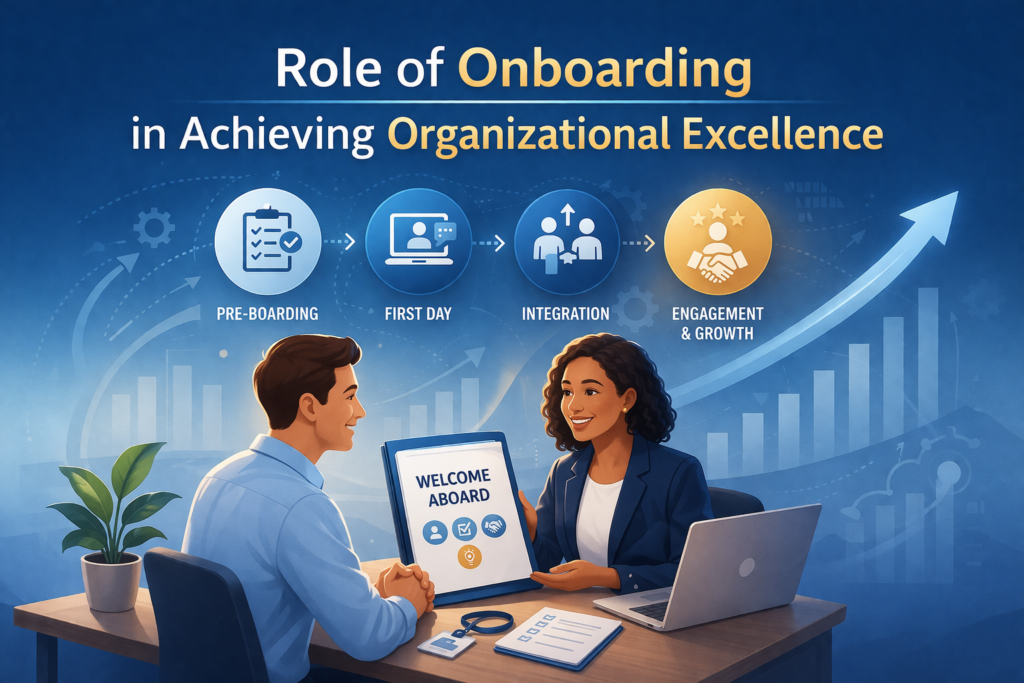
HR is far from being the sole entity responsible for designing and executing an exemplary onboarding journey. Numerous stakeholders must collaborate and prepare to welcome new hires. As part of the Role of Onboarding in Achieving Organizational Excellence, this initial interaction serves as the first opportunity to create a lasting positive impression, reassuring new hires that they have made the right decision by joining the organization. The onboarding journey encompasses a spectrum of activities and interactions, including administrative formalities, general company knowledge, role-specific training, and social engagement. This underscores the need for various teams to actively participate in the process, including HR, IT, direct managers, onboarding buddies, and any other teams integral to the new hire’s daily work. Crucially, these stakeholders must be well-prepared and proficient in their interactions to ensure that new hires enjoy a seamless and gratifying experience.
Gallup finds that when managers take an active role in onboarding, employees are 3.4 times as likely to “strongly agree” their onboarding experience was exceptional. – Gallup
Implementing an Outstanding Onboarding Journey
Define Strategic Objectives
Clearly outline the strategic objectives of the onboarding journey, aligning them with the desired outcomes the organization expects to achieve as part of the Role of Onboarding in Achieving Organizational Excellence.
Phased Approach
Recognize that onboarding commences even before the new hire’s start date. As part of the Role of Onboarding in Achieving Organizational Excellence, structure the process into distinct phases, each with well-defined objectives.
Real-time Tracking: Provide real-time data visibility to monitor the progress of each new hire’s onboarding journey as part of the Role of Onboarding in Achieving Organizational Excellence.
Phased Approach
Recognize that onboarding commences even before the new hire´s start date. Structure the process into distinct phases, each with well-defined objectives.
Effective Communication
Develop a communication strategy that engages all stakeholders throughout the entire process, keeping everyone informed and engaged.